Labial Strike of the Dragonfly Nymph

YEAR

2024


CLIENT

David Rini, MA, CMI


MEDIA

Adobe Photoshop  |  Adobe Illustrator

DESCRIPTION

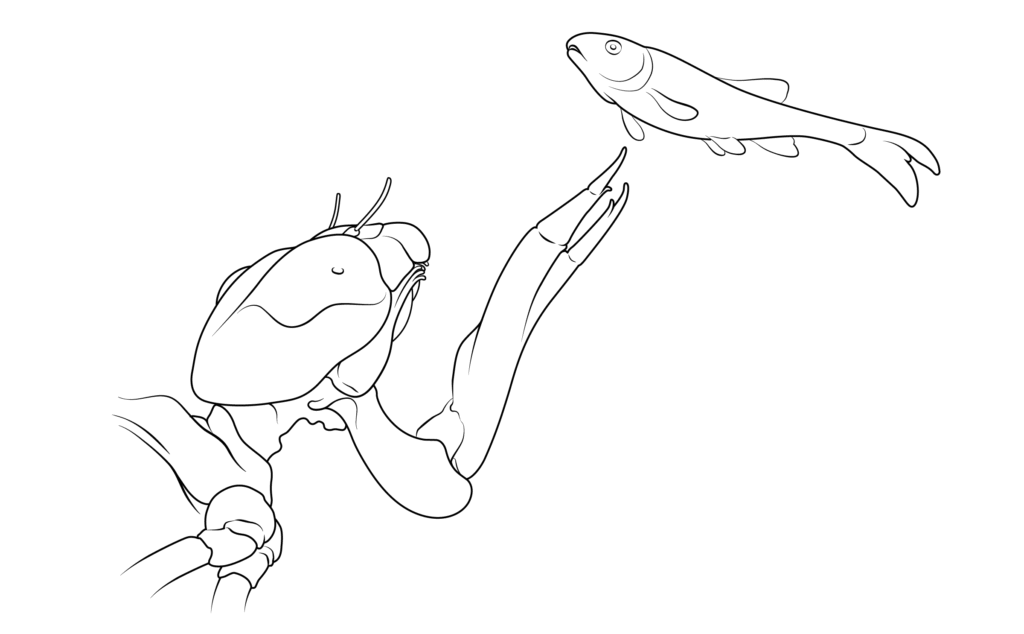
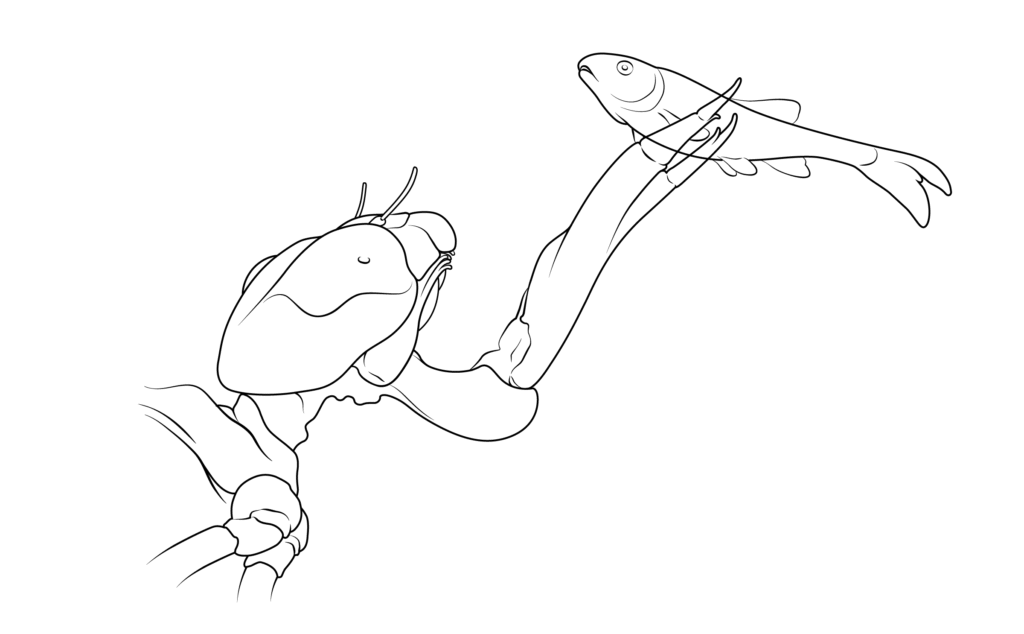
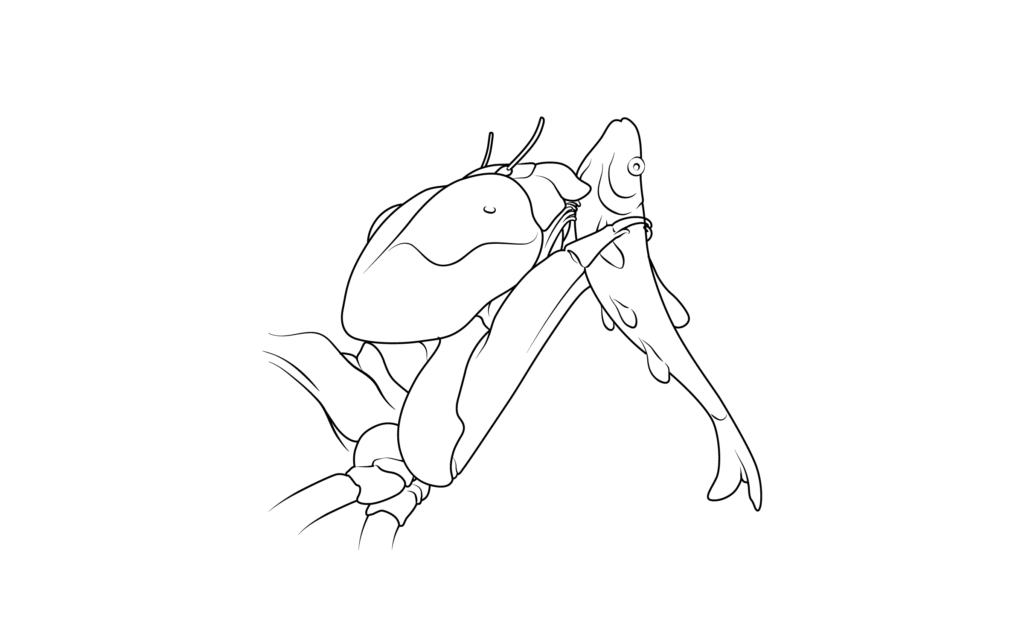
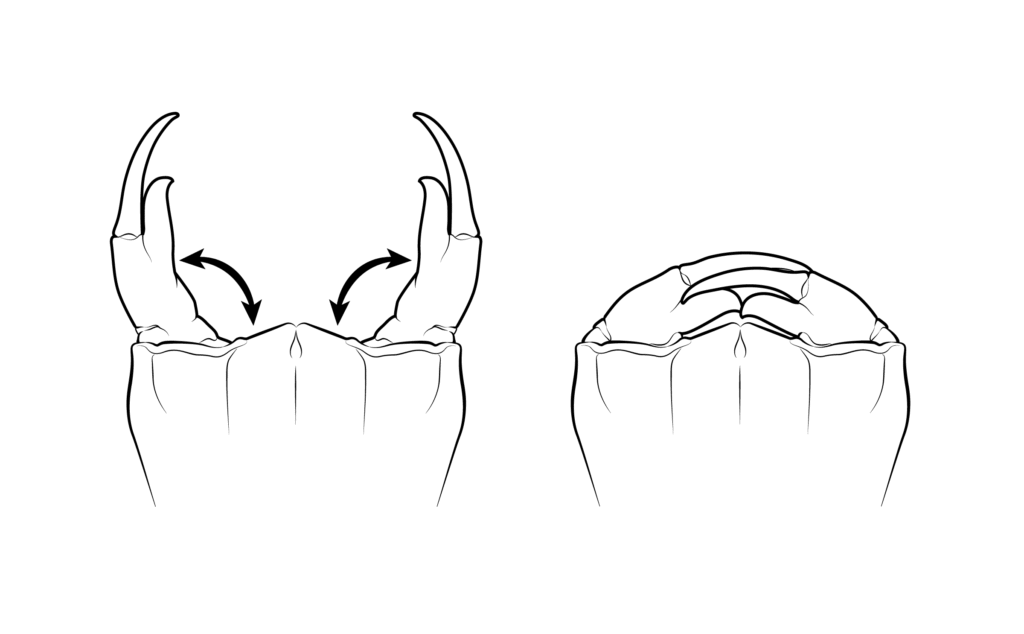
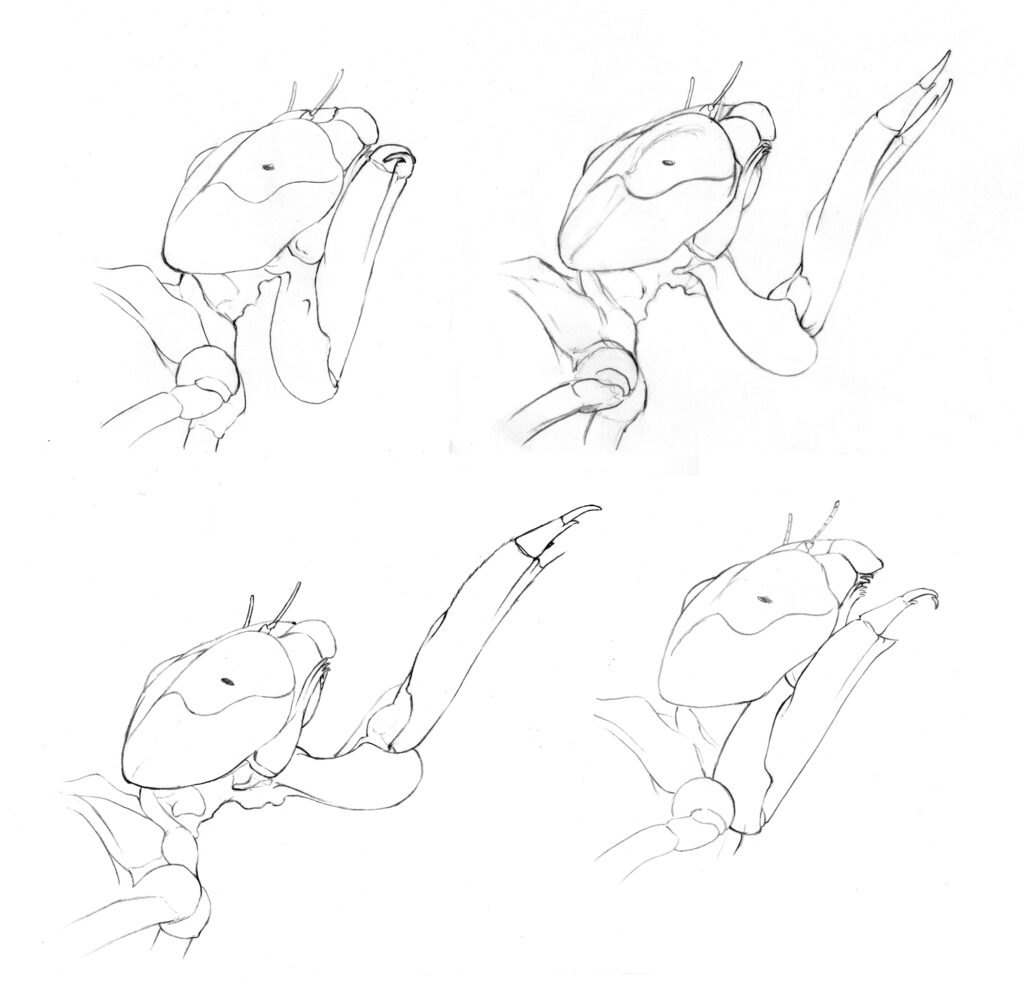
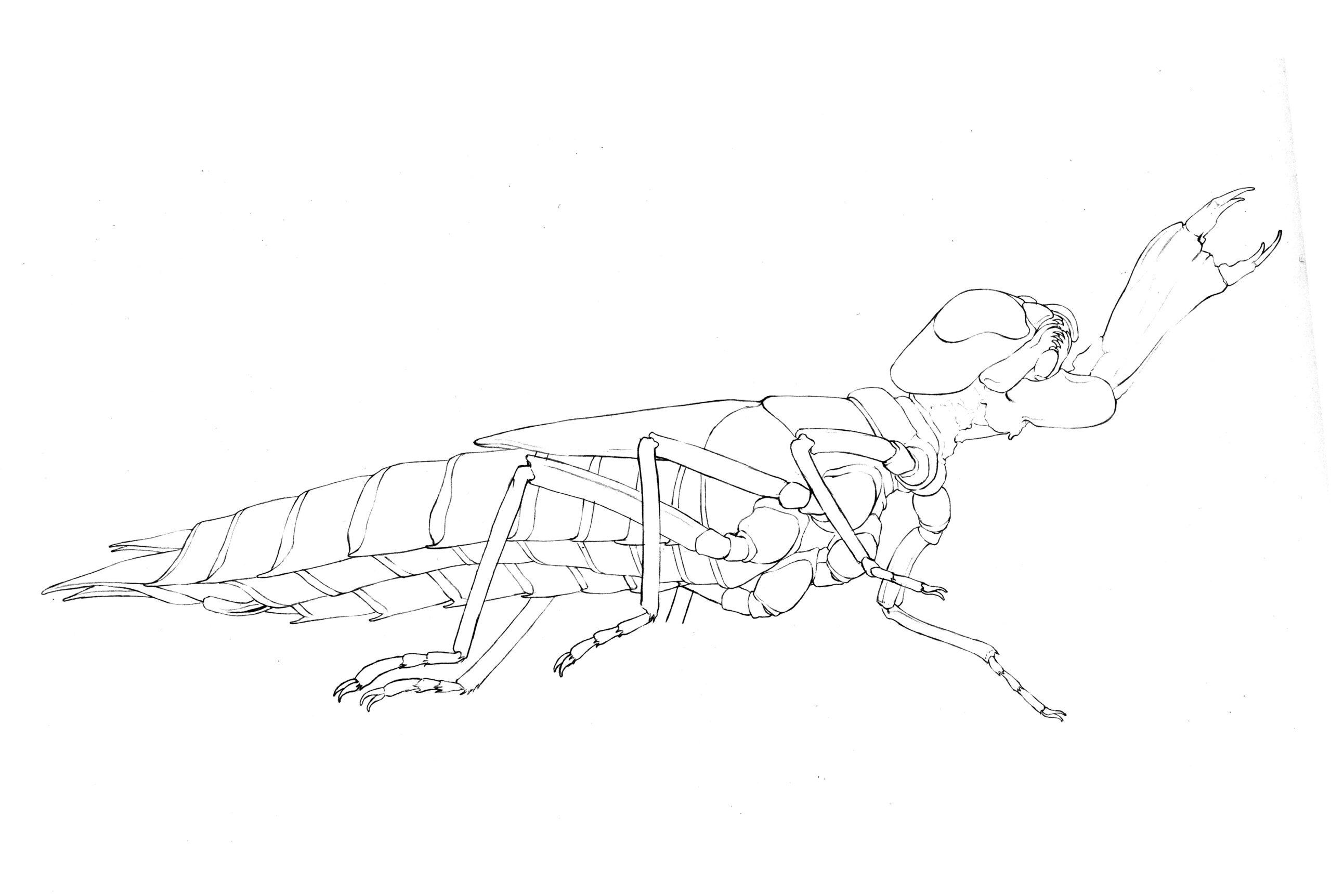
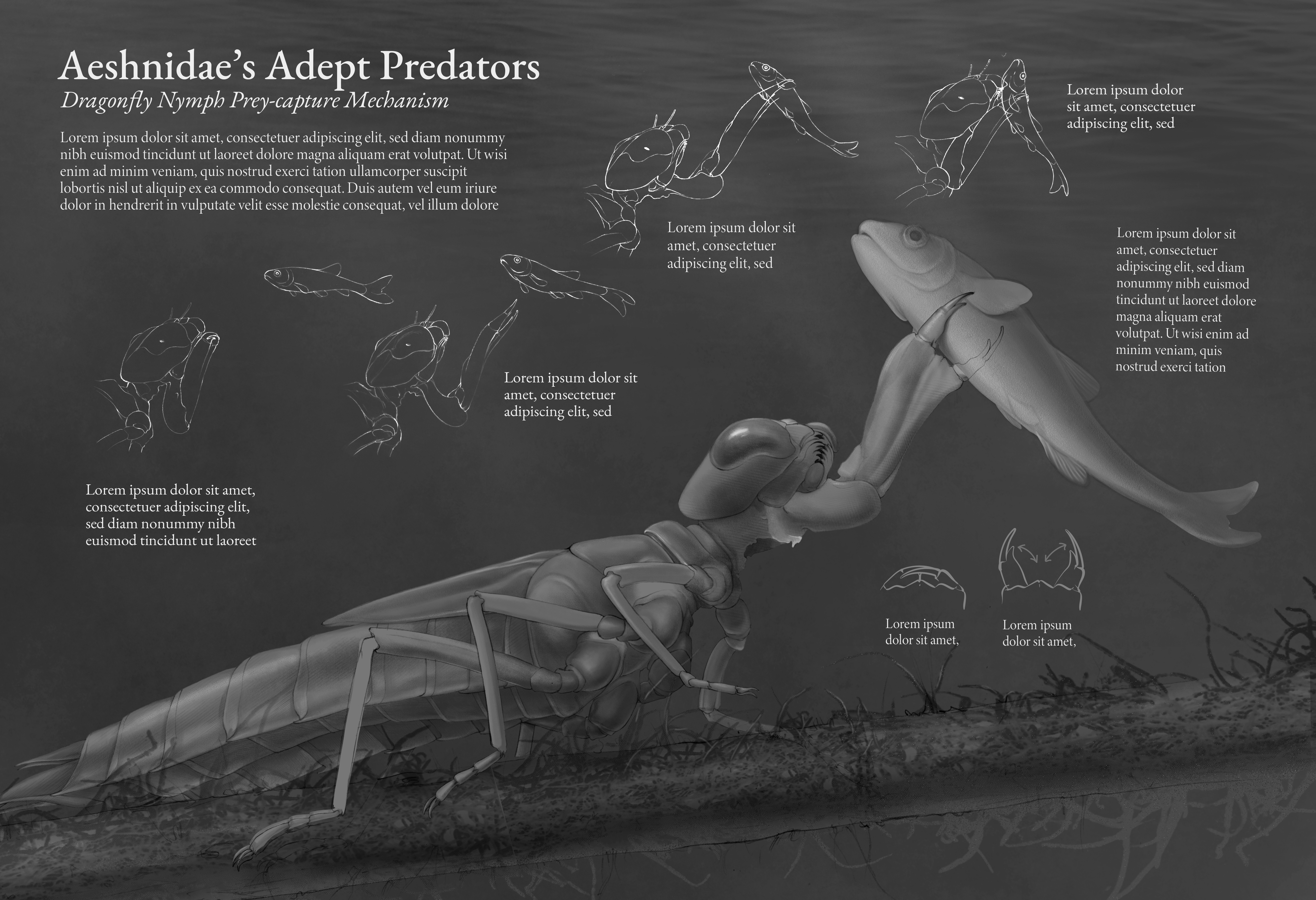
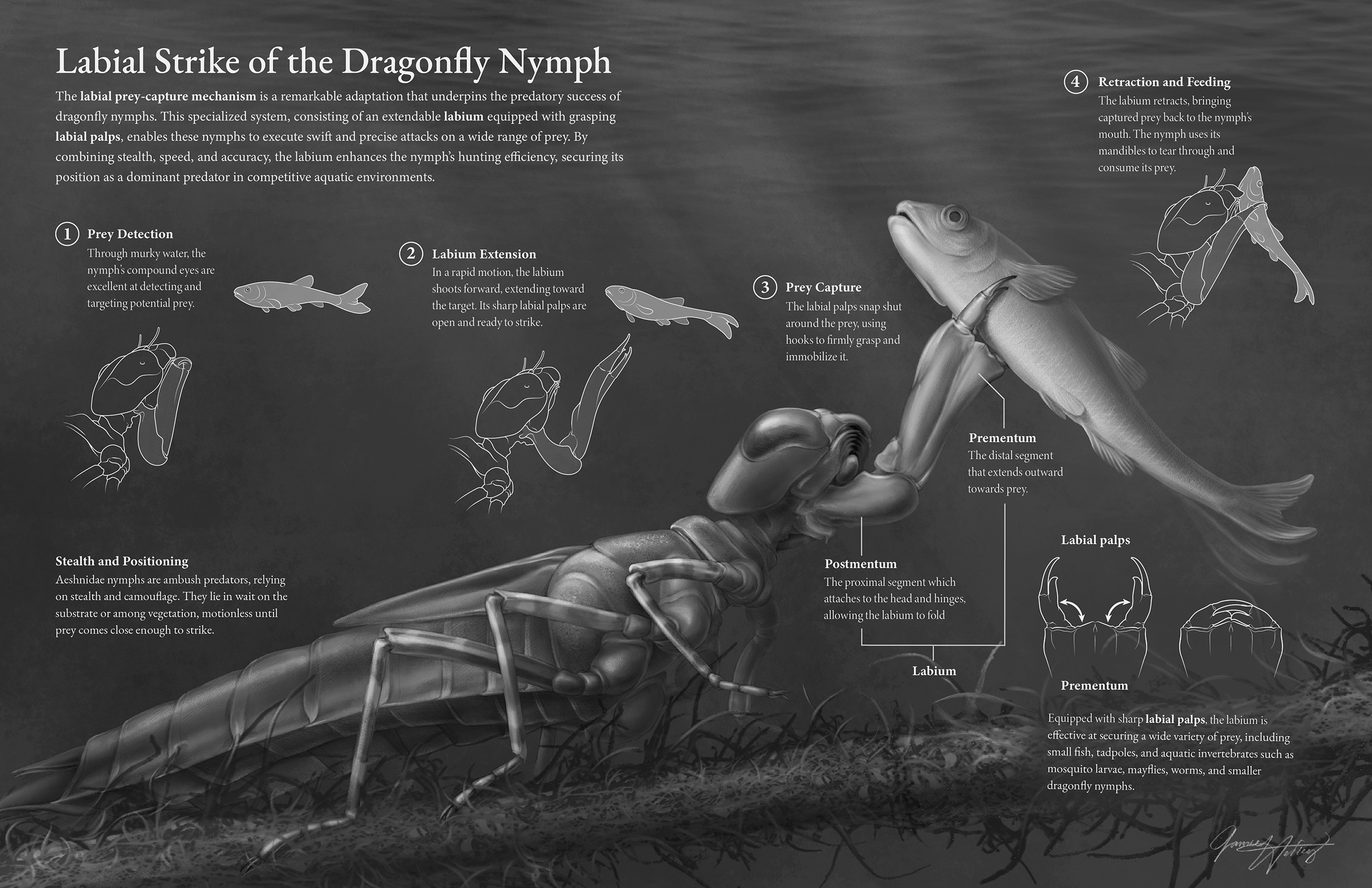
This greyscale tonal illustration examines the specialized prey-capture mechanism of dragonfly nymphs (Aeshnidae), which underpins their success as freshwater predators. At the core of this adaptation is the extendable labium, equipped with grasping labial palps that enable these nymphs to execute swift and precise attacks on a wide range of prey. The piece depicts each stage of the strike sequence: detection with compound eyes, labium extension, prey capture, and retraction, illustrating how dragonfly nymphs are so adept at ambushing prey such as tadpoles, small fish, and aquatic invertebrates.
A CLOSER LOOK

PREY DETECTION

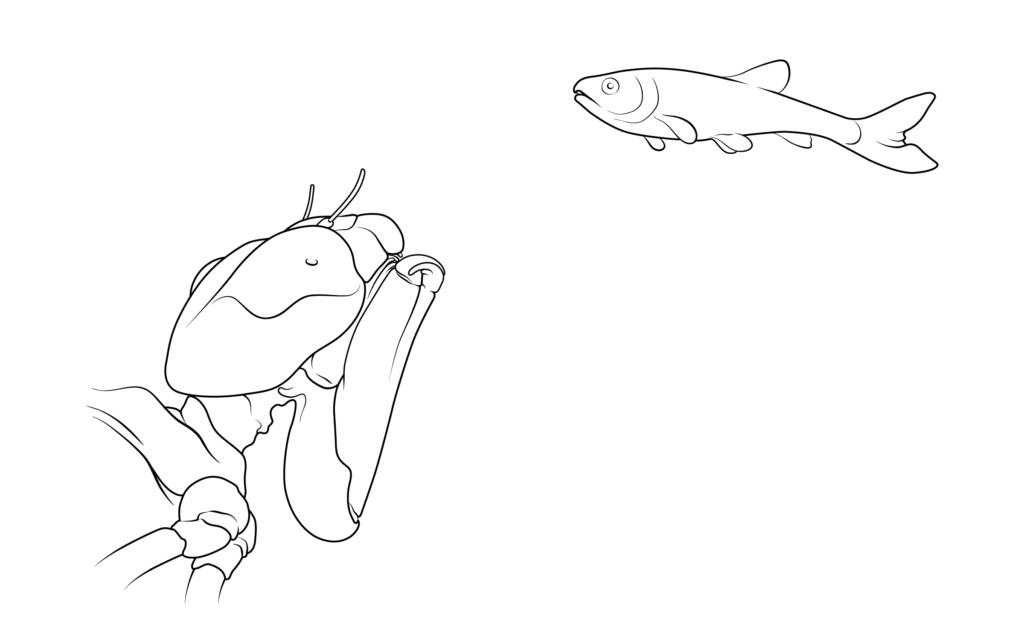
Through murky water, the nymph’s compound eyes are excellent at detecting and targeting potential prey

LABIUM EXTENSION

In a rapid motion, the labium shoots forward, extending toward the target. Its sharp labial palps are open and ready to strike.

PREY CAPTURE

The labial palps snap shut around the prey, using hooks to firmly grap and immobilize it. 

RETRACTION & FEEDING

The labium retracts, bringing captured prey back to the nymph’s mouth. The nymph uses its mandible to tear through and consume its prey.

RETRACTION & FEEDING

Equipped with sharp labial palps, the labium is effective at securing a wide variety of prey, including small fish, tadpoles, and aquatic invertebrates such as mosquito larvae, mayflies, worms, and smaller dragonfly nymphs.

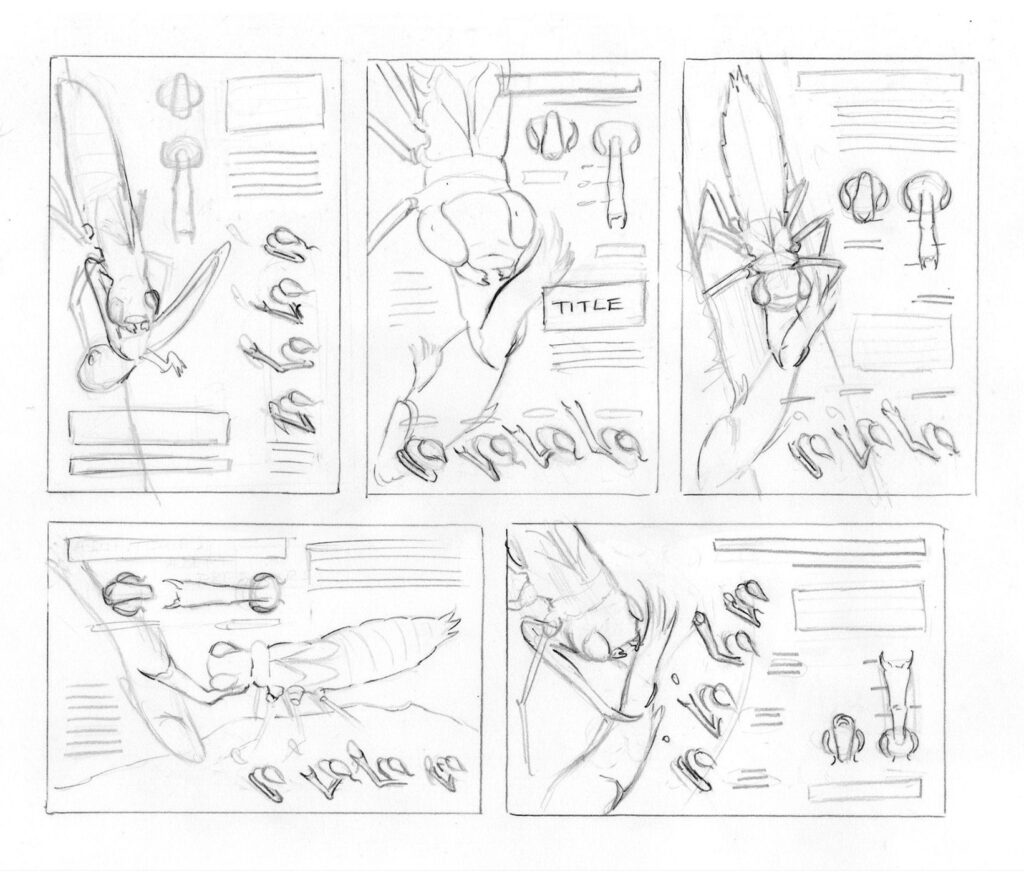
THUMBNAILS & RESEARCH

Several thumbnail sketches were created to test composition, explore ideas, plan how information will be communicated, and guide the development of the final illustration.

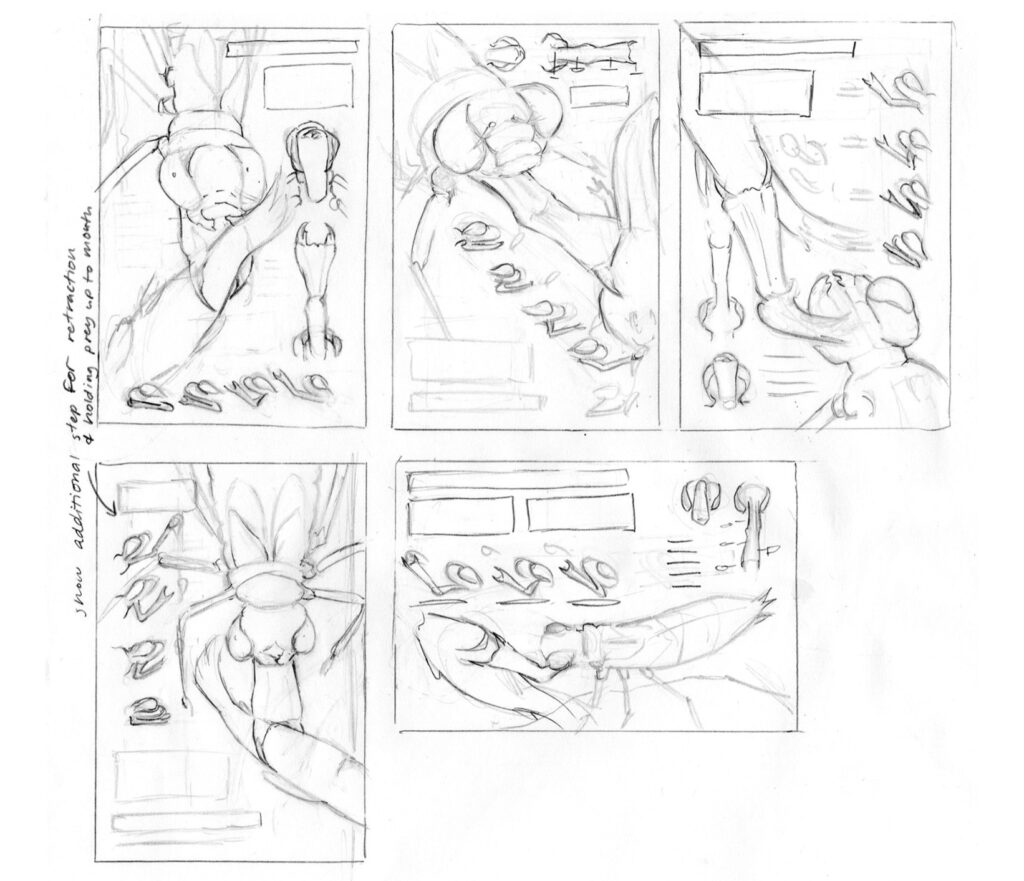
ROUGH SKETCHES

Rough sketches serve as the bridge between initial ideas and refined artwork. At this stage, the focus is on structure, proportion, and overall layout rather than detail. These drawings allow for quick problem-solving, feedback, and revisions before committing to a finalized composition.

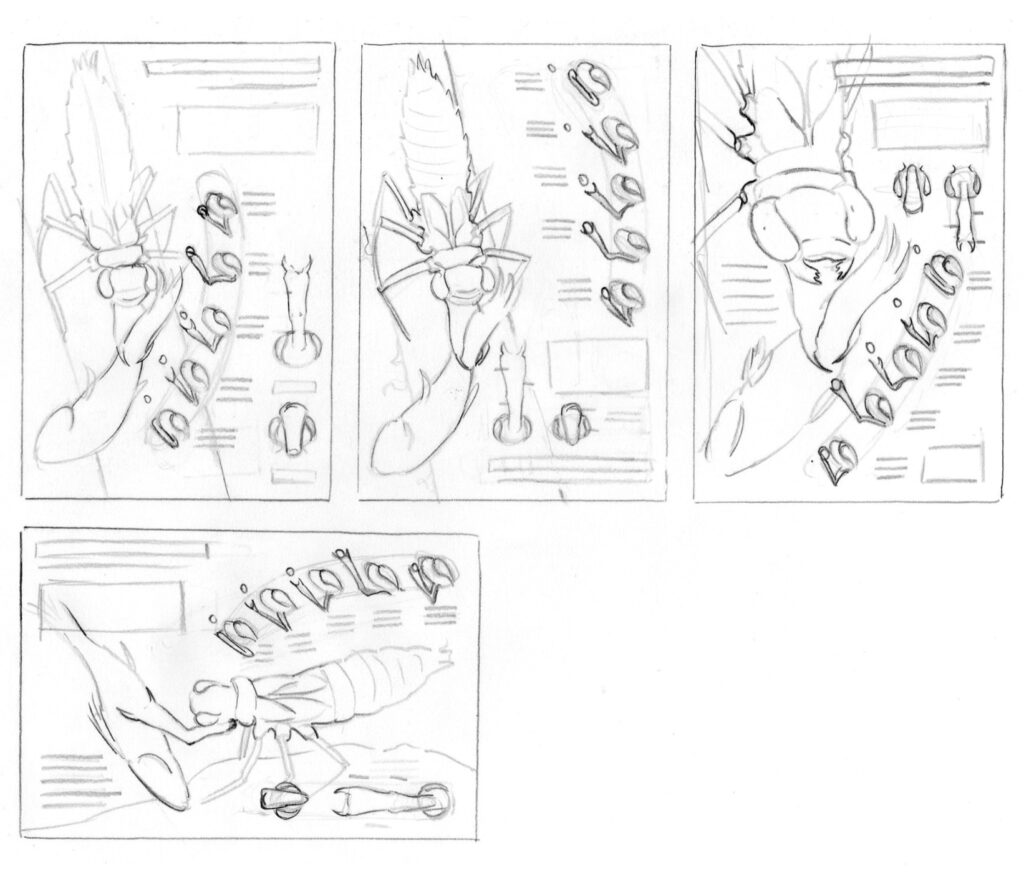
DRAFTS

Drafts establish the composition and organize how information will be presented. This stage focuses on placement, flow, and visual hierarchy, ensuring the illustration communicates clearly before final details and rendering are added.