DESCRIPTION
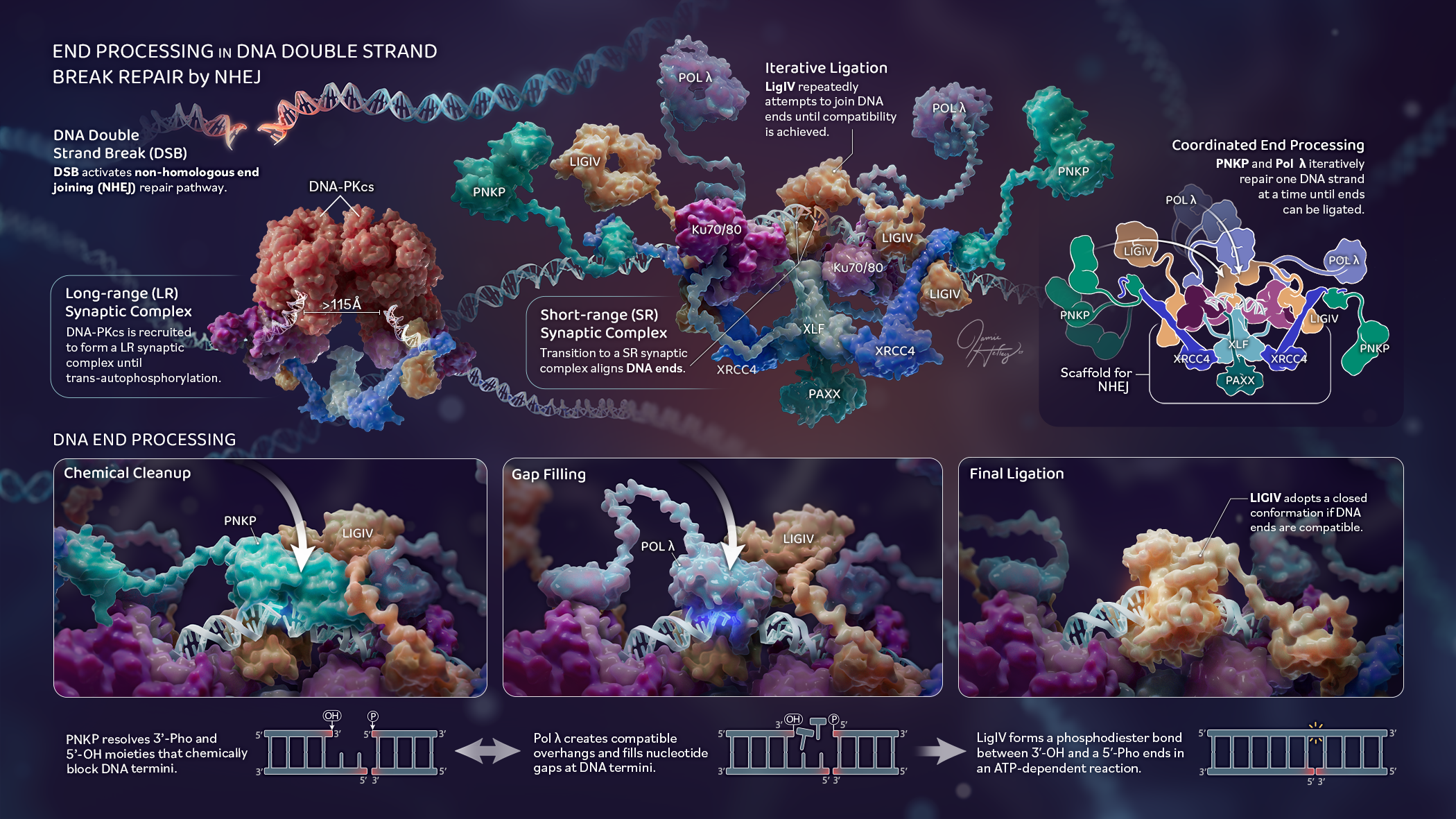
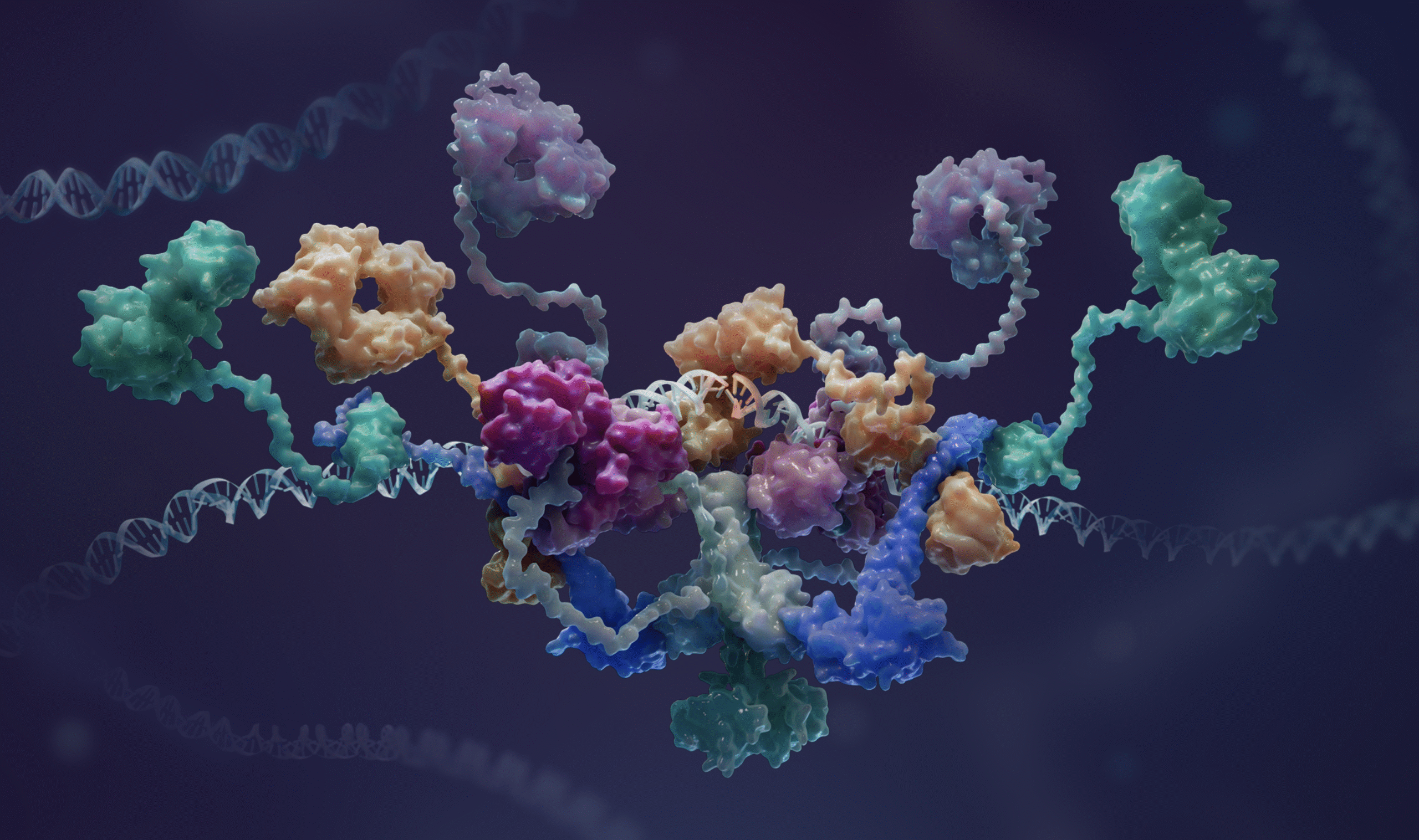
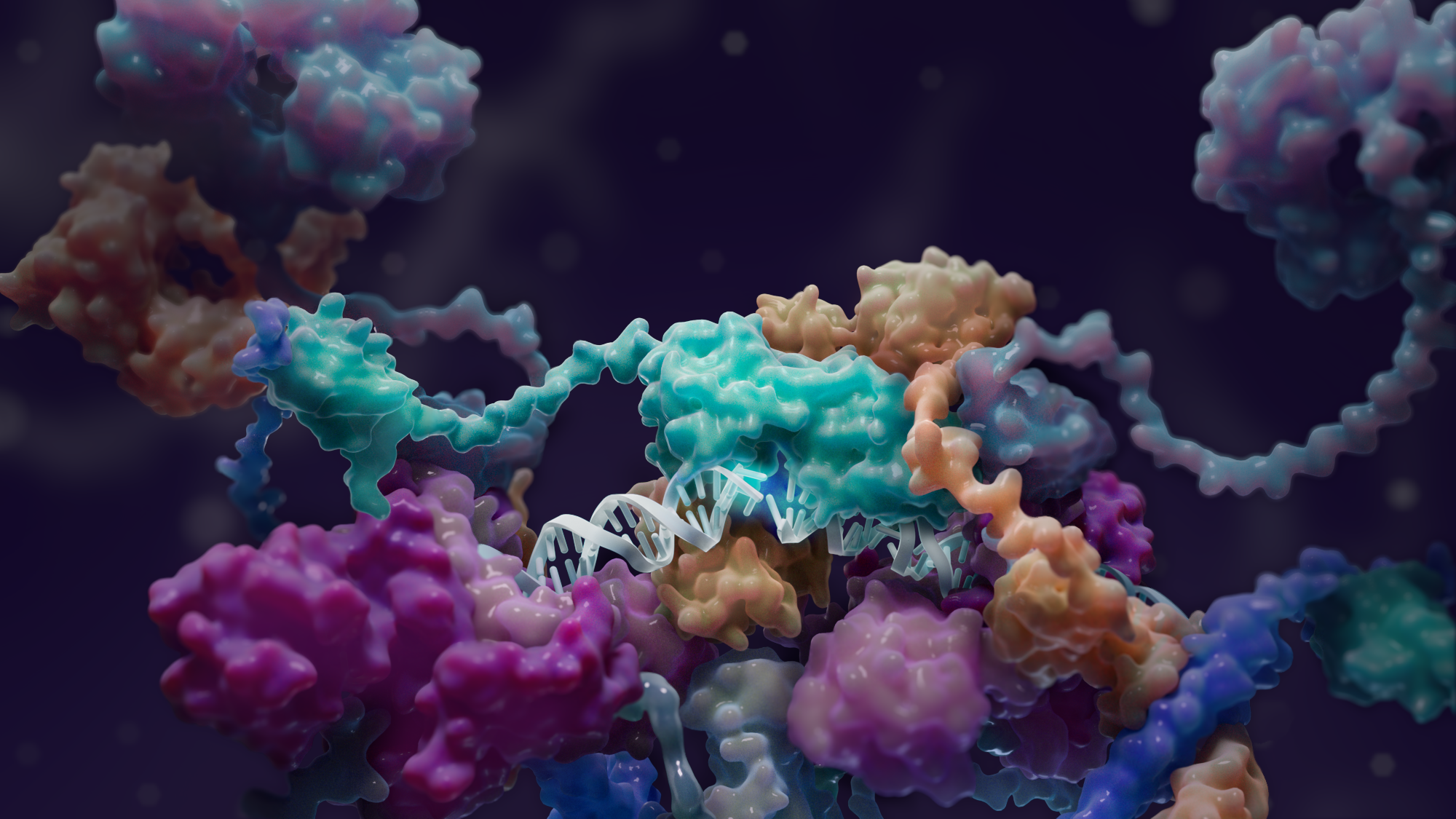
This illustration depicts end processing during DNA double-strand break repair by the Non-Homologous End Joining (NHEJ) pathway. The sequence begins with Ku70/80 binding the broken DNA ends and recruiting DNA-PKcs, which forms a long-range synaptic complex with XRCC4, XLF, and Ligase IV. After DNA-PKcs autophosphorylation and release, the complex transitions to a short-range configuration that aligns the DNA ends for repair.
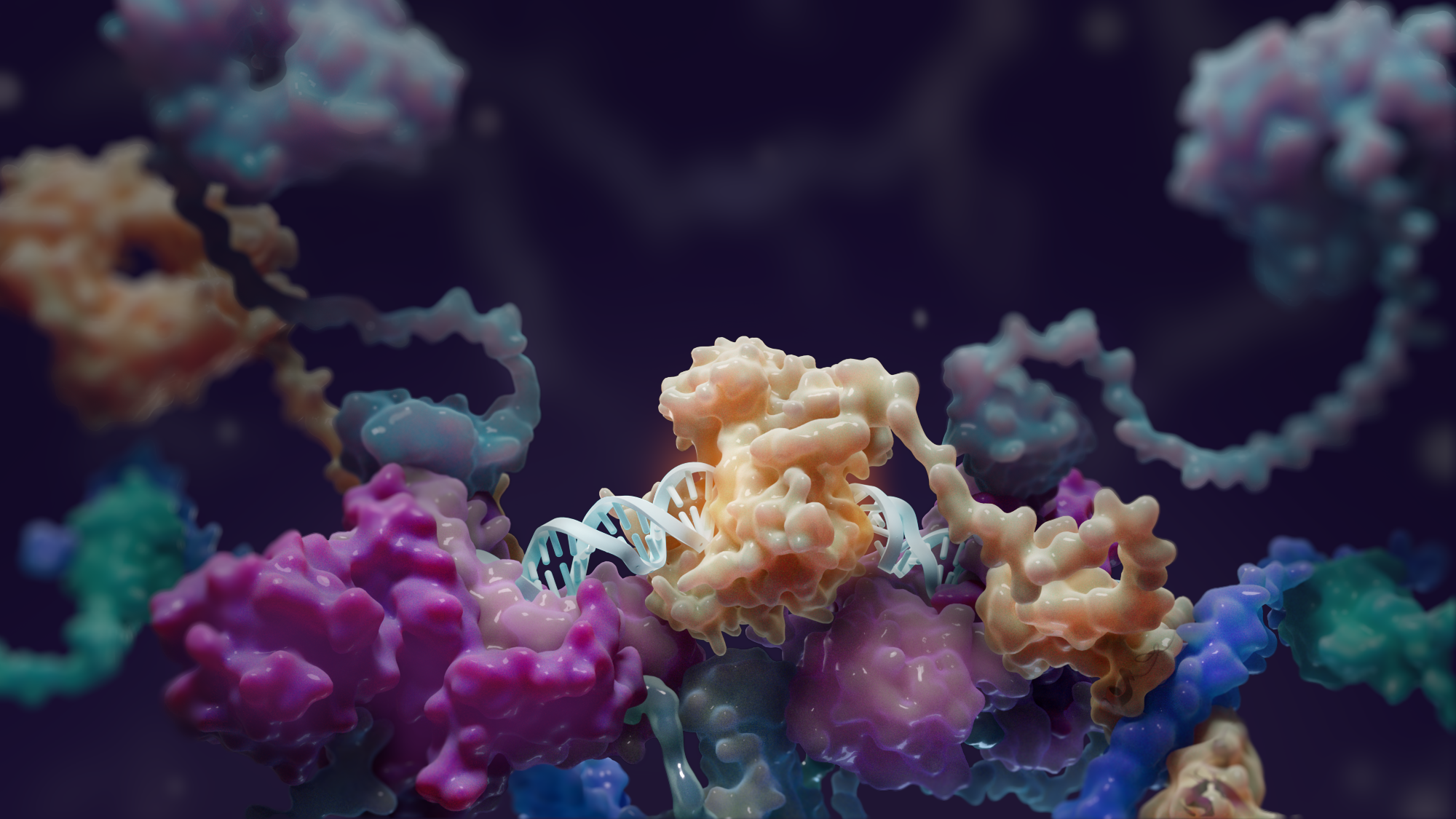
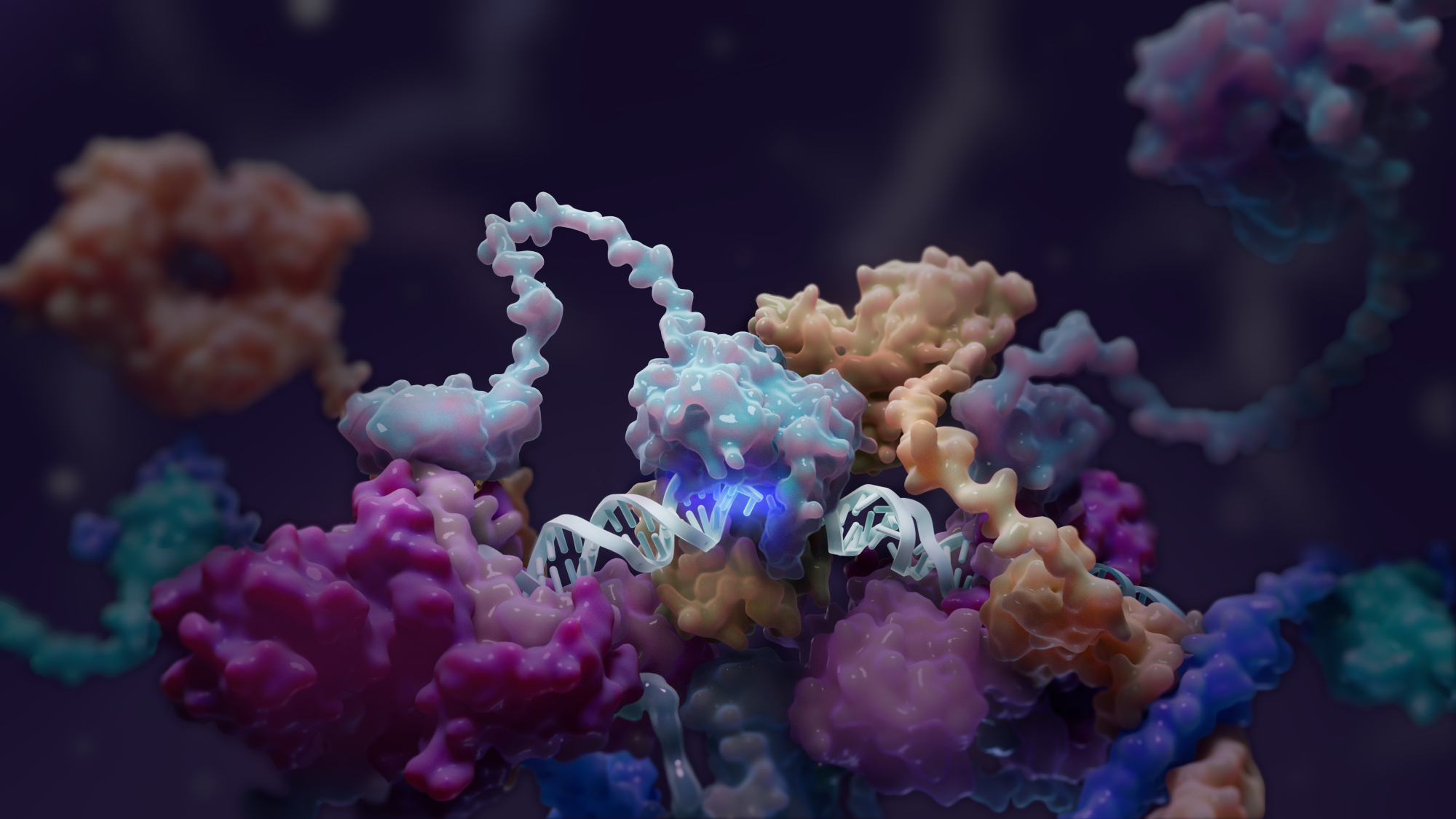
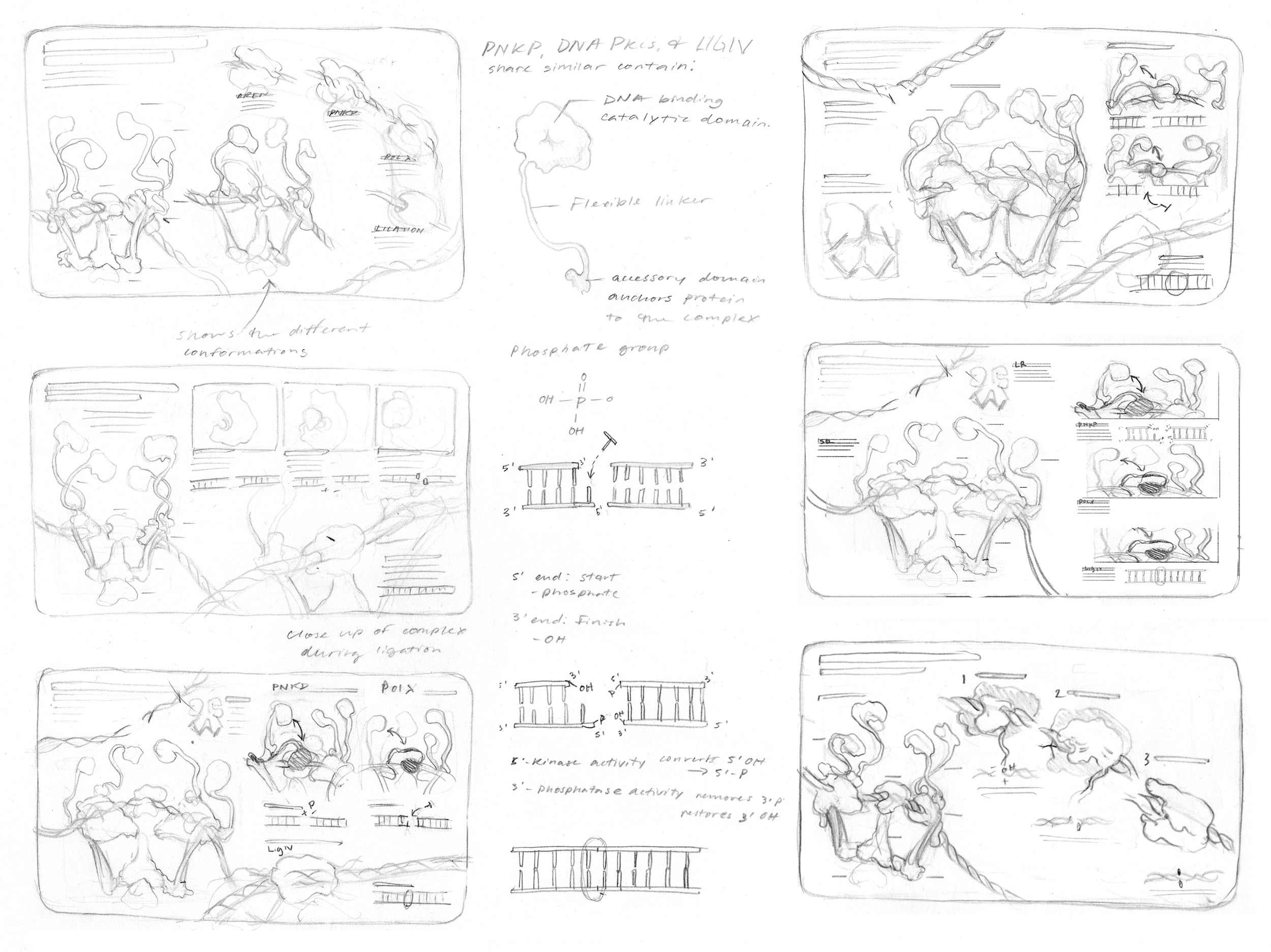
If DNA ends are incompatible, Ligase IV shifts into an open conformation, allowing end processing enzymes such as Polynucleotide Kinase/Phosphatase and DNA polymerase to clean, modify, or fill gaps in the DNA. Flexible linkers enable these enzymes to reach the break site and carry out their functions. The bottom panel highlights this repair in detail: PNKP prepares DNA termini with 3′-hydroxyl and 5′-phosphate groups, DNA polymerase generates compatible overhangs and fills gaps, and finally, Ligase IV seals the break by forming a phosphodiester bond.